In Monkton And Hereford, The Land For Sale Isn't Always The Land You Can Build On
September 10, 2026
September 10, 2026
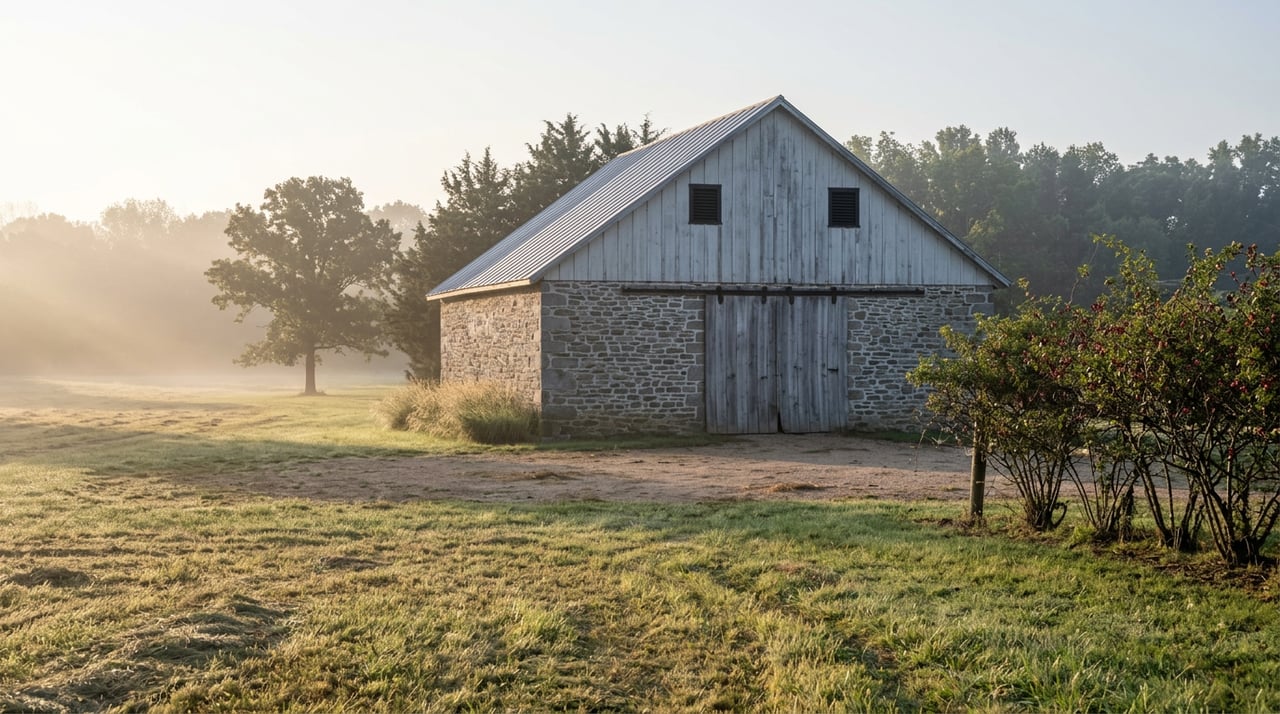
A 14-acre parcel of farmland came on the market recently just across the road from a well-known brewery in the Monkton area, around the corner from an equally well-known tavern. The listing carried a decades-old perc test approval from 1995, still technically valid, and an invitation to bring your own vision: farm it, maybe put up a cabin, "with some due diligence." That last phrase is doing more work than most buyers realize. In this stretch of northern Baltimore County, due diligence doesn't just mean checking soil and setbacks. It means finding out whether the land's development rights still belong to the person selling it, or whether they were sold off years ago to a conservation program that never shows up in the listing photos.
That's the piece of this market most out-of-area buyers miss. Two parcels can sit on the same road, carry the same acreage, and even show the same price per acre, yet one can become a custom home site and the other legally cannot. The difference isn't soil, or zoning in the usual sense. It's whether a conservation easement already sits on the deed.
Monkton and Hereford sit inside a part of Baltimore County shaped almost entirely by farmland and forest preservation programs, and the county has more of them than anywhere else in Maryland. Coastal, Gunpowder, Long Green, Manor, and Piney Run are all designated Rural Legacy Areas here, and the Gunpowder and Manor areas run directly through this corridor. But not every acre under easement got there the same way, and the program matters because the restrictions aren't identical.
The Maryland Agricultural Land Preservation Foundation, created in 1977, buys easements from farm owners with 50 or more acres and permanently limits development on that land in exchange for payment. It comes with one narrow exception: the original owner's child can still request a single one-acre family lot for a house. The Rural Legacy Program, created twenty years later in 1997, is stricter. Its easements come with no further subdivision options at all, not even for family. A third path, easements donated to the Maryland Environmental Trust, are negotiated one at a time between the landowner and the trust, so their terms vary property to property.
| Program | Started | Minimum size | Family building exception |
|---|---|---|---|
| MALPF | 1977 | 50+ acres | One 1-acre family lot allowed |
| Rural Legacy | 1997 | Varies by area | None |
| MET (donated) | 1967 | Case by case | Negotiated individually |
None of this shows up in a standard listing sheet. It shows up in the Deed of Easement, a document recorded in county land records that binds every future owner, not just the person who agreed to it.
Part of what makes this corridor unusual is that a large share of it falls inside a single, formally recognized historic district. My Lady's Manor was established in 1713 as a 10,000-acre land grant and added to the National Register of Historic Places in 1978. It stretches from Monkton in Baltimore County into Jarrettsville in Harford County and includes more than 60 principal structures, many of them still standing farms and homes from across three centuries.
The National Register nomination for the district makes a point of how little the place has changed, describing a landscape where houses from nearly every decade of those three centuries still stand at roughly the same low density as when they were built. That slow, deliberate pace is part of why the area still hosts the Manor Races, an annual steeplechase that draws people back to Monkton every spring the way a hometown tradition does. The historic designation itself doesn't restrict what a private landowner can build. What restricts it is that so many of the farms inside the district have separately placed conservation easements on their land, often through the Manor Conservancy, a local land trust built specifically to keep this part of northern Baltimore and Harford counties from developing the way land closer to the city has.
It's tempting to treat farmland preservation as a historical footnote, something that happened in the 1980s and 90s and isn't actively reshaping the market today. That's not accurate here. In May 2026, the state Board of Public Works approved a new 53-acre easement donated by Joshua Brumfield and Mary McBurney Swann, protecting a farm inside My Lady's Manor near Monkton through the Maryland Environmental Trust and the Manor Conservancy. Less than two years earlier, in August 2024, a 108-acre farm straddling the Harford and Baltimore county line was preserved the same way, adding to the same contiguous block of protected land inside the historic district.
Every one of these transactions permanently removes that acreage from the pool of land that could ever become a subdivision or a new custom home site. For a buyer comparing land listings today, that means the inventory of truly buildable acreage in this corridor is shrinking in real time, not settled decades ago. It also means the properties that remain unrestricted carry a scarcity that a simple price-per-acre comparison won't reflect.
None of this means preserved land goes quiet or stops functioning. Ladybrook Farm, an 80-acre working farm on the Little Gunpowder Falls in Monkton, operates under a MALPF easement and still runs a farm stand on Hess Road selling pastured eggs, honey, cut flowers, and hay from late spring through early fall. One Straw Farm in nearby White Hall, also preserved through MALPF, runs a certified organic CSA serving 1,500 members and supplies restaurants and farmers markets across the region. Preservation restricts future development rights. It doesn't restrict the life already happening on the land, and for a lot of buyers drawn to this area precisely for its working-farm character, that's the point rather than the problem.
The friction only shows up when a buyer's plan depends on building something new that the land's existing easement doesn't allow for.
A few steps separate buyers who find this out early from buyers who find it out after an accepted offer.
Does a conservation easement in this area ever expire? No. Every version discussed here, MALPF, Rural Legacy, and MET, is designed to be permanent and recorded in county land records, so it carries forward to every future owner of the property.
Can preserved land still be bought and sold? Yes. The landowner retains full ownership of the land itself. What's been sold or donated is the right to develop it further, not the land.
Can I still build one house on land that's under easement? It depends entirely on which program holds the easement and what the specific deed allows. A MALPF easement may permit one family lot under narrow conditions. A Rural Legacy easement generally allows none. A donated MET easement is negotiated property by property, so the only reliable answer comes from reading that specific deed.
How would I even know if a parcel I'm interested in is affected? Start with the seller and the recorded deed, then verify independently with Baltimore County's land preservation staff or the land trust named in the easement. Don't rely on a listing description alone.
If you're comparing acreage in Monkton, Hereford, or the surrounding Manor corridor, the smartest move is figuring out what you're actually buying before you fall for what the photos show. That's the kind of due diligence Erin Kelly walks land and custom-build clients through before an offer goes in, not after. If you want a clearer read on a specific parcel, or a broader sense of what's realistically buildable in this part of Baltimore County, reach out and let's build your strategy.



Your home is more than an address—it’s a reflection of your lifestyle. Partner with an expert who truly understands what luxury means.